We need this peace, this reconciliation, and this forgiveness today more than ever, in our world torn apart by conflicts and wars.

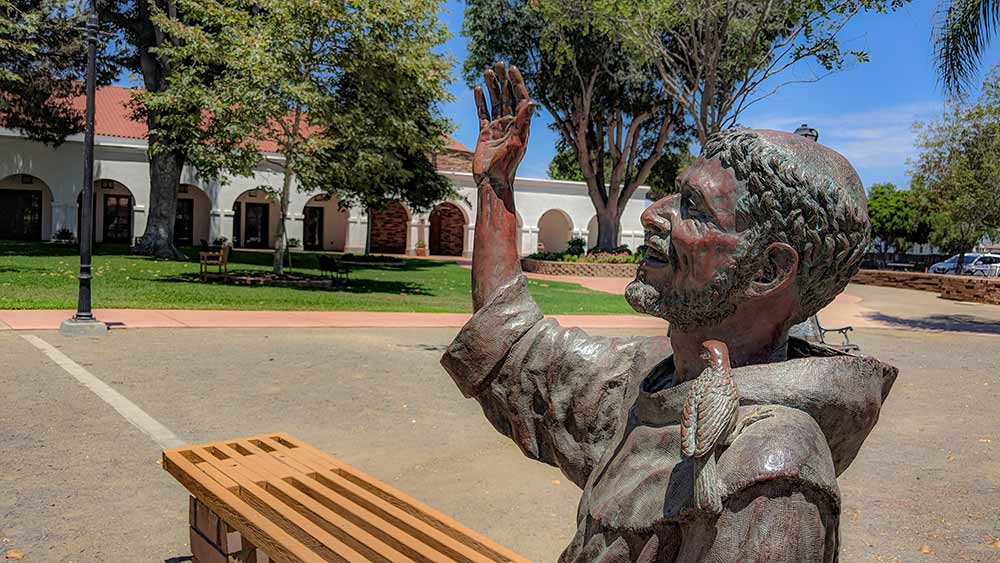
In celebration of our father St. Francis of Assisi, I would like to share with you the letter that our General Minister sent to the members of the Order of Friars Minor this week.
This year, as we celebrate the feast of St Francis, we also conclude the eighth centenary of the Canticle of the Creatures ( Canticle of Brother Sun) and look forward to the centenary of the Pasch of St Francis, to be celebrated next year (2026).
From the Canticle to the Transitus
We find a link between the Canticle and the death of St Francis in the ancient account of the Compilatio Assisiensis, where, on hearing of the approach of his death, St Francis said:
“If I am to die soon, call Brother Angelo and Brother Leo that they may sing to me about Sister Death.”
Those brothers came to him and, with many tears, sang the Canticle of Brother Sun and the other creatures of the Lord, which the Saint himself had composed in his illness for the praise of the Lord and the consolation of his own soul and that of others. Before the last stanza, he added one
about Sister Death. (AC 7)
St Francis himself, then, encounters death accompanied by the singing of the Canticle. Only a short time earlier, he had added a verse about forgiveness, with the purpose of urging the Podesta and
the Bishop of Assisi, who were in conflict, to be reconciled with each other.
Pardon and Reconciliation as a Priority
As we prepare to celebrate the Transitus of Francis, we too would like to focus on this connection, which comes to us from St Francis’ own actions. Firstly, we might allow ourselves to be touched by his invitation to forgiveness and reconciliation:
Praised be You, my Lord, through those who give pardon for Your love, and bear infirmity and tribulation.
Blessed are those who endure in peace, for by You, Most High, shall they be crowned.
Both God and the friars are addressed in this invitation; forgiveness is possible through the love of God (“for Your love”) by our entering into a relationship with God and drawing on his immense mercy. In addition,infirmity and tribulation can only be “endured in peace”by looking with faith and hope towards the Most High and his crown. God and the brethren meet in this great invitation to forgiveness and reconciliation from which the mysterious gift of peace blossoms – allowing all difficulties to be “endured in peace.”
We need this peace, this reconciliation, and this forgiveness today more than ever, in our world torn apart by conflicts and wars. Firstly, the far too many wars between peoples and between nations, but also the struggles and discord within individual countries, and also, unfortunately, the divisions within our fraternities or our Christian communities. St Francis’s invitation to forgiveness comes to us in our daily lives and invites us, through the gift of pardon offered and received, to take an initial concrete step towards that peace which we implore from God for ourselves and for the whole world.
The Testament - an Invitation to Remembrance
In the months preceding his death, in addition to composing the verse of the Canticle to reconcile the Podesta and the Bishop, St Francis dictated his Testament, which, in its first section, is a remembrance of the most important stages of his life, beginning with his encounter with lepers, in which he recognises the beginning of his own conversion. He then reviews events such as the practice of prayer in churches, his choice to live in the Catholic Church, the gift of the brothers and the experience of the first fraternity. This fraternity was characterised by the distribution of all goods to the poor; by common prayer; by the choice to be minors and submissive to all; by manual work; and by the proclamation of peace. St Francis thus teaches us to review the important stages of our lives seeing them through the lens of faith which recognises the active presence of the Lord in each of these moments.
“The Lord gave me, Brother Francis, thus to begin … and the Lord led me among lepers … and gave me faith in churches … the Lord gave me some brothers … the Most High himself revealed to me that I should live according to the pattern of the Holy Gospel … the Lord revealed a greeting to me that we should say: May the Lord give you peace!”
Therefore, we can learn from Francis to “make remembrance”, that is, to review the stages of our life, until we become attuned to recognising in them the presence of the Lord, who has accompanied us in the story of our vocation. Thus, we discover that everything is a gift from God, and this conviction that all good comes to us from God, the great Giver, is the key to understanding the Canticle, a hymn of praise and thanksgiving for the great gift of creation. It is this same conviction that makes the entire life of St Francis a joyful thanksgiving, that is, a restitution to God of the gifts received from Him.
Even Death is a Gift
This capacity for remembrance, that is, to view our story through the eyes of faith, also explains the extraordinary way in which St Francis approaches death, composing the last verse of the Canticle:
Praised be You, my Lord, through our Sister Bodily Death, from whom no one living can escape. Woe to those who die in mortal sin. Blessed are those whom death will find in Your most holy will, for the second death shall do them no harm.
St Francis recognises the mysterious presence of God even in death itself, and so death becomes a gift by which the Lord is to be praised. St Francis can appreciate even death in terms of the beauty of life and creation, because he knows that everything is a gift from God. It is this profound faith that allows him to see the beauty of life even when life ends. All his experiences — bitter and sweet — recalled in his Testament prepared him for this supreme restoration of his life to God, which our tradition rightly calls the Transitus of St. Francis, and which we can therefore recognize as a Pasch, a transition through death to a life in fullness.
It is Christ’s Pasch, indeed, that has definitively transformed death into a sister for whom we give praise to God. Francis can look at death with eyes full of hope, proclaiming, “blessed are those whom death will find in Your most holy will, for the second death shall do them no harm.” His vision is of a new and full life, of that eternal life that the Lord, the Resurrection and the Life, promises to those who believe and hope in him (cf. Jn 11:25-26).
The Promise We Have Received
We too know this promise well; it is the one we heard before the altar on the day of our Profession, when the celebrant told us: “and I for my part, if you observe these things, promise you eternal life.” Brothers and sisters, let us continue to be faithful to the gift we received that day, in order to savour the life which has been promised to us. It is eternal not only because it awaits us after death, but also because it has already begun and as of now changes the quality of each of our days, making it, with St Francis, a Canticle of Praise to God.
Happy Feast of St Francis, brothers and sisters, in praise and thanksgiving!
Rome, General Curia, 17th September 2025
Feast of the Stigmata of St Francis
Br. Massimo Fusarelli and his brothers on the General Definitory
Prot. 114668
Sign up for free class
It’s easy and free!
Tags:Pastoral Reflections