As Jesus enters Jerusalem, there is a sense that something huge is about to happen. The people must have thought, “This is it. This is the moment we’ve been waiting for.”

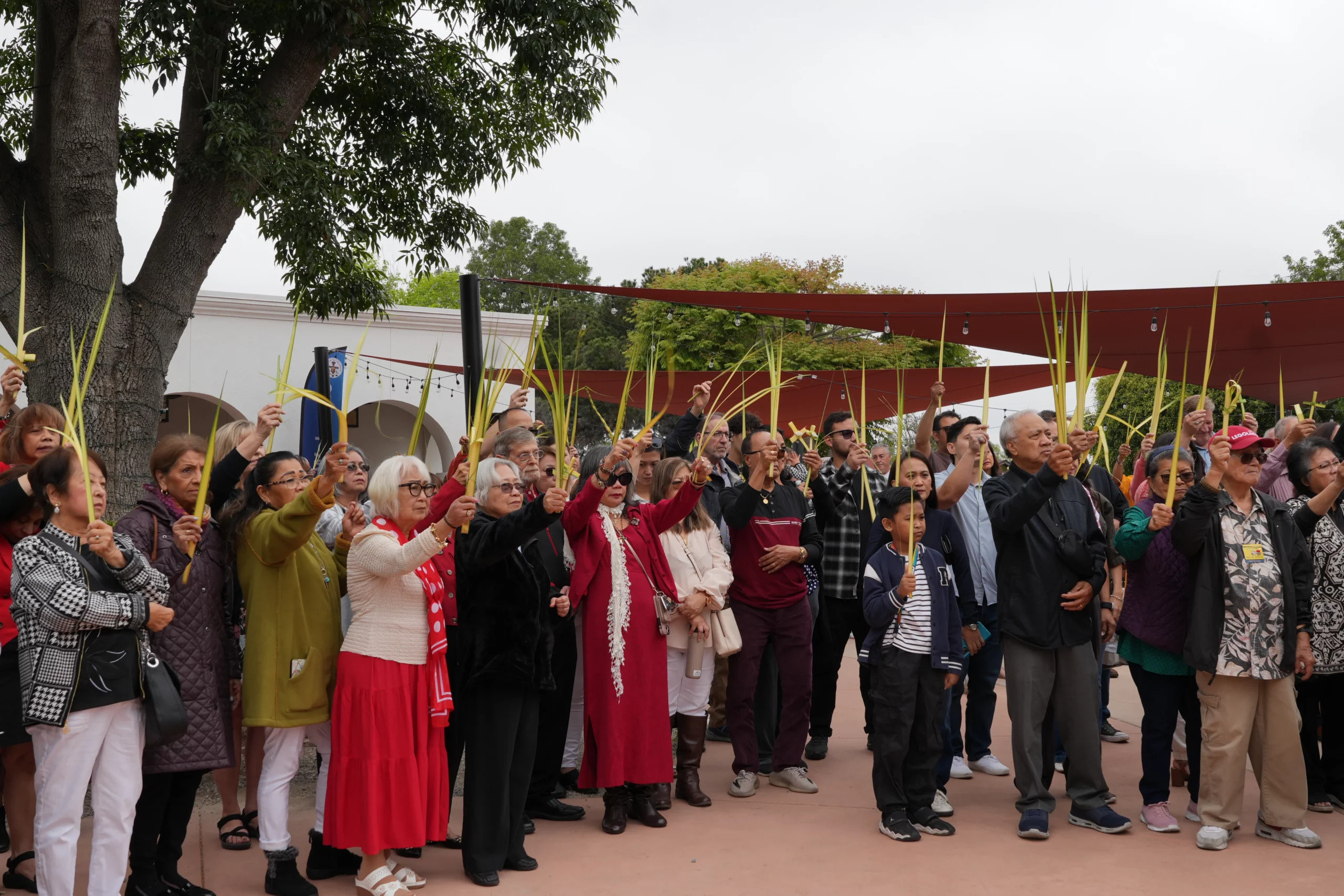
Reading the gospel together helps put us right into the story. It helps us to picture the moment. We can imagine the city packed as Passover approaches. There’s noise everywhere, and then the word begins to spread. Jesus is coming! People pour out of their homes and shops. They rush toward the gates of the city. And there He is. Jesus of Nazareth is entering Jerusalem, not on a warhorse. But riding on a donkey.
It does not look very impressive, but the crowd loves it. They shout. They sing. They wave palm branches. They throw cloaks on the road. They cry out, “Hosanna! Blessed is He who comes in the name of the Lord!” The crowd treats Him like a conquering hero, like a king returning victorious from battle.
As Jesus enters the city, there is a sense that something huge is about to happen. History feels like it’s bending in a new direction. The people must have thought, ” This is it. This is the moment we’ve been waiting for.
So, what went wrong? How do you go from palm branches to the cross in less than a week? How does “Hosanna” turn into “Crucify Him”? How does the crowd that welcomes Him as king end up shouting that they have no king but Caesar?
What changed? It’s likely the same thing that led Judas to betray Jesus. Jesus wasn’t the Messiah they wanted. They wanted strength, spectacle, and power. They wanted a Messiah who looked like a warrior, not a carpenter. A Messiah on a stallion, not a donkey. A Messiah in shining armor, not a simple tunic. A Messiah who would crush the Romans, restore political power, and make Israel great again.
Instead, they got a Messiah who talked about loving enemies, forgiving sinners, serving the poor, and losing your life in order to save it. This Jesus didn’t fit their expectations. He wasn’t flashy enough. He wasn’t aggressive enough. He didn’t play the game the way they wanted Him to. And when it became clear that He wasn’t going to be the Messiah of their dreams, they turned on Him.
So, they hand Him over to the Romans. They ask Pontius Pilate to do their dirty work. They ask the empire to save them from their own Messiah by crucifying Him like a criminal, between thieves.
And before we shake our heads at them, before we say, how could they have been so blind? We should probably stop and ask a harder question. Are we really any different? Don’t we do the same thing, just in more subtle ways?
We praise God on Sunday and then ignore the suffering person placed in our path on Monday. We pray the rosary, reflecting on the mysteries of Christ’s life, and then fail to notice the mystery of God unfolding in our own lives. We can remember every detail of a TV show, a sporting event, or a viral video, but struggle to recall the Gospel we heard proclaimed just a week ago.
We want Jesus, but on our own terms. We want a Savior who comforts us, but not one who challenges us. We want a God who affirms us, but not one who asks us to change. We want a Messiah who blesses our plans, not one who calls us to take up a cross.
For two thousand years, the world has done this strange and tragic dance with Jesus. We long for Him, and we push Him away. We ask where God is and then ignore Him when He speaks. We complain about God’s silence while filling our lives with so much noise that we couldn’t hear Him even if He shouted.
In that sense, we really aren’t so different from the crowd on Palm Sunday.
And yet, Jesus knows all of this. He knows the cheers won’t last. He knows the same mouths shouting “Hosanna” will soon shout “Crucify Him.” He knows betrayal, abandonment, and suffering are coming. And still, He rides into Jerusalem. He doesn’t turn back. He doesn’t change course. He doesn’t harden His heart or seek revenge. He keeps going.
Because this week, the week that begins with palms and ends with a cross, is not a tragic accident. It is the very reason He came.
The God we encounter this week is a God who chooses love over vengeance, mercy over power, self-gift over self-preservation. A God who enters into human suffering rather than standing safely above it. A God who allows Himself to be rejected in order to redeem those who reject Him.
When Jesus’ broken body is taken down from the cross, when all hope seems lost, when it looks like evil has won, that is not the end of the story. It is the moment toward which all of history has been moving.
We’re not there yet. The Church wisely makes us walk through this week slowly. We don’t rush to Easter. We stay with the tension, the silence, the discomfort. Because only by staying with the cross can we begin to understand the depth of God’s love.
So today, as we hold our palms and listen to the Passion, we are invited to see ourselves in the crowd, not to condemn ourselves, but to be honest. Honest about our mixed motives. Honest about our shallow faith at times. Honest about how often we want a Messiah on our own terms.
And even more importantly, we are invited to see Jesus as He truly is: Not the Messiah we would invent, but the Messiah we desperately need.
This God of surprises, this God who loves beyond all telling, will not allow death to have the final word, not over His Son, and not over those who welcome Him into the city of their hearts.
Holy Week has begun. And Jesus is still entering Jerusalem. The question is not whether He comes, but whether we will follow Him all the way to Golgotha.
May the Lord always give you his peace.
Fr. Lalo Jara, OFM
Pastor, Mission San Luis Rey Parish
Sign up for free class
It’s easy and free!
Tags:Pastoral Reflections