St. Ignatius of Antioch called the Eucharist the “medicine of immortality.”

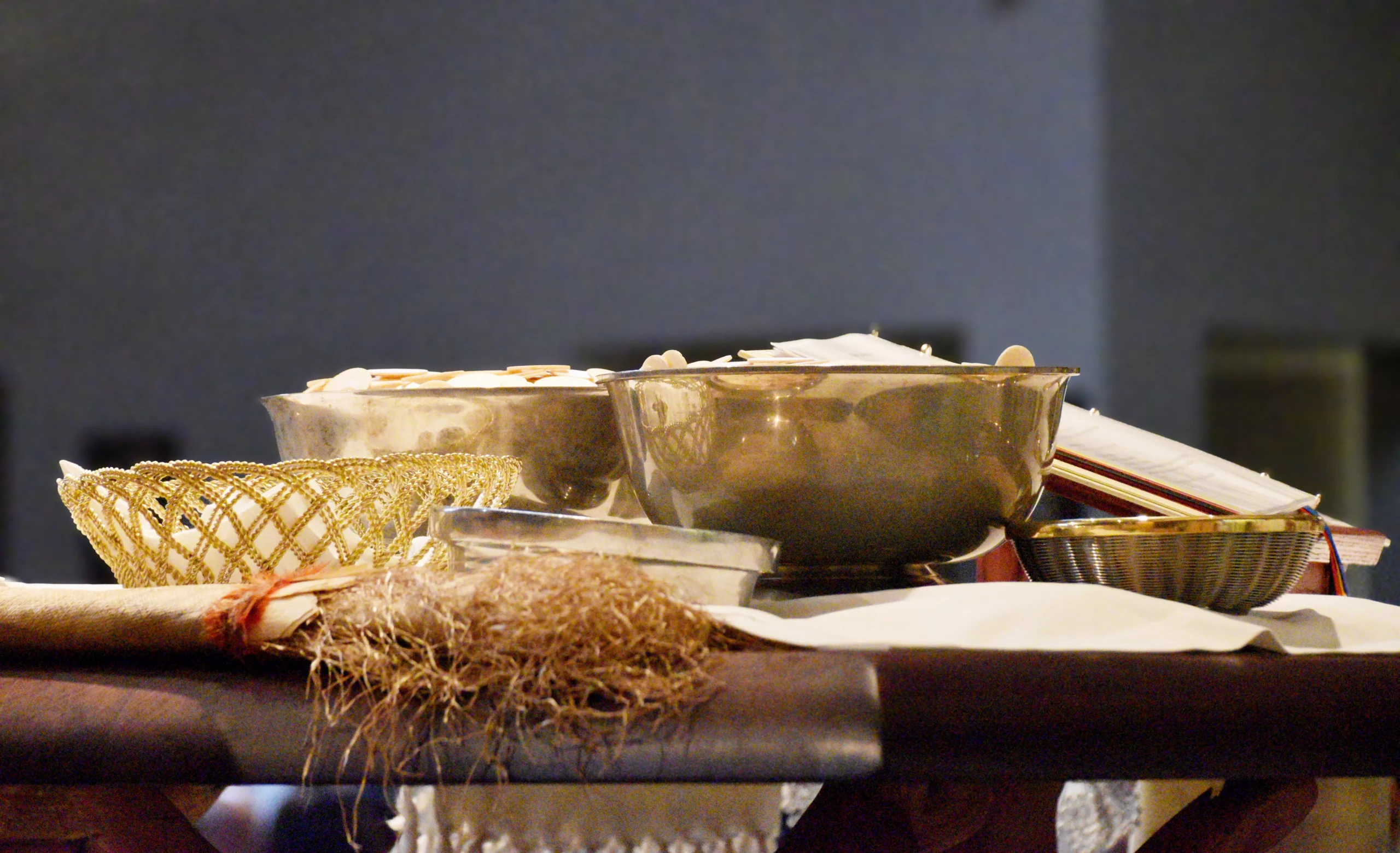
Every year, two weeks after Pentecost, we have this beautiful opportunity to celebrate one of the incredible gifts that God has given us – the Blessed Sacrament.
It is vital for us to understand just what the Catholic belief is. The Eucharist is truly the Body and Blood of Christ. It is not merely a symbol, but the reality. It is not just a commemoration of all that Jesus did to save us. It actually presents to us the saving mystery of the Cross. Though Jesus died once over 2000 years ago on Calvary, the Body He offered continues to be given to us, and the Blood He spilled continues to be poured out for us in this Blessed Sacrament.
That is why Saint Paul can say with such conviction in today’s second reading, “The cup of blessing that we bless, is it not a sharing in the Blood of Christ? The bread that we break, is it not a sharing in the Body of Christ?” (1 Cor 10:16). Another word that can be used for “sharing” or “participation” is “communion”. The word “communion” literally means “a coming together”. So, when we receive Holy Communion, we are being “brought together” with Jesus. We are united with Him in a real way. There is nothing in this world that can make this union with Jesus happen like the Eucharist we receive at Mass.
From the beginning, Christians have believed that the Eucharist is truly the Body and Blood of Christ. They were convinced of it because of Jesus’ words in today’s gospel. He uses very graphic language so that there is no doubt that He means what He says. We know that what He says upsets the crowd because they start quarreling over it. They are taking His words very literally. And that is what Jesus intends.
We use the term “body” to refer to the Eucharist. But in this passage, He uses the much more graphic term “flesh”. He continually repeats the words, “Drink my Blood.” And when He talks about eating, He gets still more graphic. First, He tells them that they must “eat” His flesh, and then He tells them to “feed” on it. That second word for “feed” is meant to remind us of the way animals feed. You might think of pigs feeding from a trough. Jesus means to shock the crowd, making it clear that He is speaking quite literally. What He is offering them – and us – is nothing less than His true Body and His true Blood.
If Jesus is speaking literally, then aren’t we acting like cannibals when we eat His flesh and drink His blood? Not at all. First of all, we are eating Jesus’ flesh and drinking His Blood in the form of bread and wine. In His great love and mercy, Jesus offers Himself in a way that we can actually consume, and that will be pleasing to us. Secondly, cannibals eat dead flesh and blood. But the Body and Blood of Jesus are living. He is the “living bread that came down from Heaven.” When we receive the Eucharist, we are receiving the Body and Blood of our Risen Lord, who has conquered death and can die no more.
And it is precisely for that reason that Jesus gives us His Body and Blood. He goes on to tell the crowd, “Very truly I tell you, unless you eat the flesh of the Son of Man and drink his blood, you have no life in you.” We need to take these words literally as well. The only way to have the life of Jesus in us is to receive His Body and Blood. There is nothing else and no one else who can give us that life. And it is the only life worth having.
We have our earthly life as a gift of God. But God the Father wants something greater for us. He wants to give us an abundant life. He wants us to have His love pumping in our hearts and flowing out to everyone we meet. He wants us to know the joy that comes from a life given in service to others. That is why Jesus came. He came that we might have life and have it in abundance. We receive that life by receiving Jesus’ Body and Blood.
Jesus makes another promise to those of us who receive His Body and Blood. He promises that we will live forever and that He will raise us up on the last day. We are meant to take these words literally as well. The life that Jesus wants to give us is one that survives our physical death. Jesus calls it “eternal life”. Just as Jesus lives forever, so those of us who receive the Eucharist will live forever because we do not have a merely earthly life, but the life of Jesus within us. It is that life that will sustain us in this world, just as it sustained the Jews in the desert. That life will also help us to face our physical death with patience and courage, with the faith that our physical death is not the end. And it is that life that we will experience in its fullness when we see God face-to-face.
One of the first saints to write about the Eucharist – Saint Ignatius of Antioch – called it “the medicine of immortality.” What he meant by that is that receiving the Eucharist prepares our body for the resurrection on the last day. In a mysterious way, our body is being nourished and strengthened by the Eucharist, just as our soul is. Just as physical food strengthens us for hard labor, so the Blessed Sacrament makes our bodies capable of receiving the grace of resurrection. Though everyone will be raised from the dead – believers and non-believers alike – we can expect that there’ll be a difference in the bodies of those who regularly received this medicine of immortality. We can’t know what that difference will be. But it will be noticeable.
What an incredible gift is given to us every Sunday and every day! Why would we ever want to miss out on the opportunity to receive the Body and Blood of Jesus in the Blessed Sacrament? What can possibly be more important than this weekly date with Jesus? We are given nothing less than the very life of God, who is love. And we are given the promise of eternal life and resurrection. Let’s not miss receiving Holy Communion for any reason so that we can lay hold of all the blessings that God has prepared for us through this Blessed Sacrament.
May the Lord always give you his peace.
Fr. Lalo Jara, OFM
Pastor, Mission San Luis Rey Parish
Sign up for free class
It’s easy and free!
Tags:Pastoral Reflections